|
total fire bans
in australian states
What is a Total Fire
Ban?
A total fire ban may be declared for
days when fires are likely to escape and be difficult to contain for
public safety. Extreme fire danger is caused by a combination of dry
vegetation and hot, dry, windy weather. The Bureau of Meteorology
provides advice on forecast weather conditions and fire danger ratings
during the Bushfire Danger Period.
The Rural Fire Services Commissioner
in each state declares Total Fire Bans based on this advice and other
information. This decision is generally made at around 5pm each
afternoon during the Bushfire Danger Period and the Total Fire Ban
applies for the following day, starting from midnight and lasting 24
hours. The RFS Commissioner is also responsible for exemptions to Total
Fire Bans. A range of activities may be exempt from Total Fire Bans,
such as emergency infrastructure work or ceremonial fires. These are
detailed each time a ban is declared.
How is a Total Fire
Ban determined?
During a total fire ban certain restrictions
apply to lighting fires in the open which applies when we are camping.
The degree of fire danger is calculated using information on
temperature, wind speed, relative humidity and the drought factor (how
dry the vegetation is). This information is forwarded to bushfire
services from the Bureau of Meteorology twice a day. The mid-afternoon
weather statement is used to determine the need for a total Fire Ban the
following day.
How will I know if a
Total Fire Ban is declared?
Announcements are made in
newspapers, radio & on television. When travelling & camping try
listening to the evening or morning news on a local radio station for
fire restriction warnings updates & Total Fire Ban warnings.
What are Fire Areas?
A new process for declaring Total
Fire Bans & delivering fire weather information is now being used. The
declarations were previously based on the Bureau of Meteorology Weather
Forecast Districts. Declarations are now based on Fire Areas which are
smaller & based on local government area boundaries. This means fire
weather information and Total Fire Bans are more specific to local
conditions.
Total Fire Ban Rules
Each state has their own specific
rules for Total Fire Ban days. Please check with the local authorities
you are travelling & camping in to make certain what Total Fire Ban
rules apply to you.
If in doubt it is best not to light
a fire in the open during a Total Fire Ban. This includes incinerators &
barbecues which burn solid fuel, e.g. wood or charcoal, however in some
states gas & electric barbecues may be used if.....
-
it is on a residential property
within 20m of the house or dwelling
-
if it is a picnic area and the
appliance is approved by council, National Park or State Forest
-
it is under the direct control of
an adult
-
the ground within 2m of the
barbecue is cleared of all materials which could burn
-
you have an immediate and
continuous supply of water available.
Fines and penalties
Lighting a fire on a day of Total
Fire Ban can attract a fine of up to $5,500 and/or 12 months gaol in
some states. Penalties for a fire that escapes and damages or destroys
life, property or the environment can attract much greater fines & gaol
terms with maximums at $100,000 and/or 14 years.
Civil law suits can also be
brought against the person responsible for a fire by those seeking
compensation for losses sustained. For public safety, a Total Fire Ban
is declared for days when fires are likely to escape and be difficult to
contain.
What are the Total
Fire Ban rules for each state?
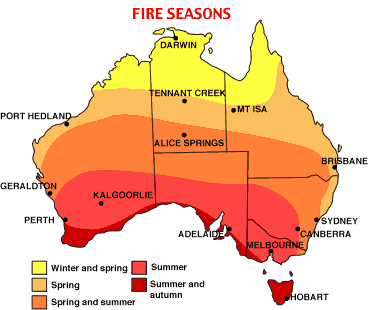
In some states such as Northern
Territory, Western & South Australia there is a Total Fire Ban over the
summer fire period. By hitting the state bush fire services icon below,
you will find information on that particular state & the rules or
restrictions that apply or during a declared Total Fire Ban day. |